

FortiBleed: When a Security Device Becomes the Biggest Vulnerability
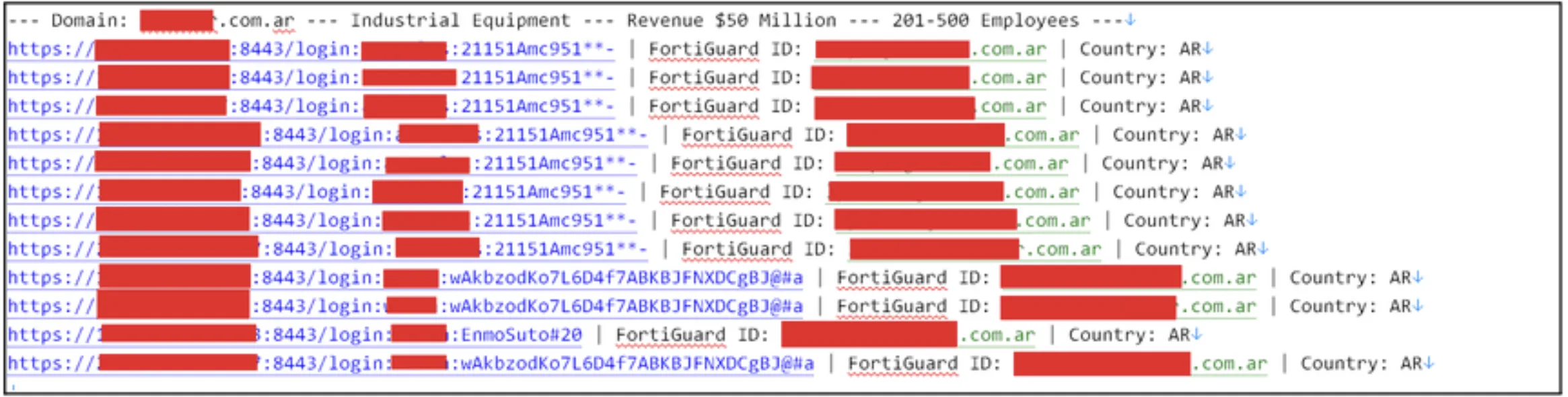
The FortiBleed campaign is one of those incidents that should land on the desk of every CTO, CISO, and IT manager — in Poland and across the globe. Not because the attackers used exceptionally sophisticated methods — quite the opposite. Because compromising nearly 74,000 Fortinet devices required nothing more than mass internet scanning, extracting configuration files, and a cluster of a few dozen graphics cards. It is a lesson in how neglecting the basics can cost more than any zero-day attack.
How Did the FortiBleed Campaign Work?
The attackers built their campaign on a few simple yet devastatingly effective steps. Rather than investing in costly exploits, they focused on what was already available — misconfigured devices and unpatched appliances exposed directly to the internet.
Step by Step: Anatomy of the Attack
- Mass internet scanning — automated tools scanned global network resources searching for publicly accessible Fortinet devices (FortiGate, FortiProxy).
- Configuration file exfiltration — leveraging known vulnerabilities (including CVE-2022-40684 and earlier CVEs related to unauthorized file reads), attackers downloaded configuration files containing credentials and password hashes.
- GPU-accelerated password cracking — the harvested material was fed into a cluster of dozens of graphics cards, which quickly cracked weak or default administrator passwords.
- Access takeover — the obtained credentials were then used to log directly into devices and create hidden backdoor accounts.
The final result: over 73,000 compromised devices — many of them protecting corporate, industrial, and government networks.
Why This Is Not Just a Fortinet Problem
It would be an oversimplification to point the finger solely at the vendor. Fortinet released relevant patches and advisories — the problem is that thousands of organizations simply did not apply them. This is a systemic challenge across the entire IT sector: the gap between the moment a patch is released and the moment it is actually deployed in a production environment.
Edge devices — firewalls, VPNs, access controllers — are inherently internet-facing. They are the first line of defense, but also the first target. Any vulnerability in this area, even a straightforward one, becomes extremely valuable to attackers operating at massive scale.
What Does This Mean for Your Organization?
Regardless of whether you use Fortinet hardware or another vendor's equipment, the lessons from FortiBleed are universal:
- Edge devices must be updated as a top priority, without unnecessary delay.
- Default passwords and weak credentials are an unacceptable risk in 2024.
- Network device configuration files contain critical data — they must be treated as corporate secrets.
- Infrastructure visibility (asset management) is the foundation of security — you cannot protect what you do not know exists.
- Network segmentation can limit the impact of a single compromised edge device.
IT Infrastructure Management as a Security Strategy
Incidents like FortiBleed make it abundantly clear that IT security is not a product — it is a process. Purchasing even the best firewall on the market does not guarantee protection unless it is accompanied by proper device lifecycle management: regular updates, configuration audits, monitoring, and resilience testing.
At AbejaIT, we help organizations build IT infrastructure that is not only efficient but also secure and manageable in the long term. Proactive patching, resource segmentation, and proper access management policies are elements we implement for our clients as a standard — not an optional add-on.
The Role of Artificial Intelligence in Detecting Similar Threats
One of the key takeaways from analyzing the FortiBleed campaign is that attacks of this type — automated, conducted at enormous scale — are difficult to detect using traditional methods. Tools based on behavioral analysis and machine learning can identify anomalies in network traffic far faster than signature-based systems alone.
If your organization wants to strengthen its threat detection capabilities, it is worth considering AI solutions capable of analyzing logs, network traffic, and user behavior in real time — delivering alerts before an incident escalates into a full-scale breach.
Practical Recommendations for IT Teams
Based on the analysis of the FortiBleed campaign and similar incidents, here is a list of actions worth implementing without delay:
- Edge device vulnerability audit — verify which devices are internet-facing and what firmware versions are running on each one.
- Patching prioritization — devices directly accessible from the internet should receive updates within 24–72 hours of a critical patch being published.
- Replace default credentials — every network device should have a unique, strong password. Deploying a password manager for the IT team is an investment that pays off quickly.
- Access log monitoring — unexpected logins, especially from unusual geographic locations, must trigger real-time alerts.
- Penetration testing and attack simulations — regularly verify that existing security controls actually work as intended.
- Incident response plan — when an attack occurs, every minute counts. Procedures must be written and tested before they are needed.
Conclusion
The FortiBleed campaign is not a story about the exceptional genius of cybercriminals. It is a story about how scale and automation can substitute for technical sophistication. The attackers did not need complex exploits — patience, widely available tools, and administrator negligence were enough. For businesses, this means one thing: IT security must be a continuous process, not a one-time project.
If you would like to assess the security posture of your infrastructure or implement solutions that genuinely reduce the risk of similar incidents — reach out to the AbejaIT team.
Source: Sekurak