

1. Market Context and Business Framework (Executive Summary)
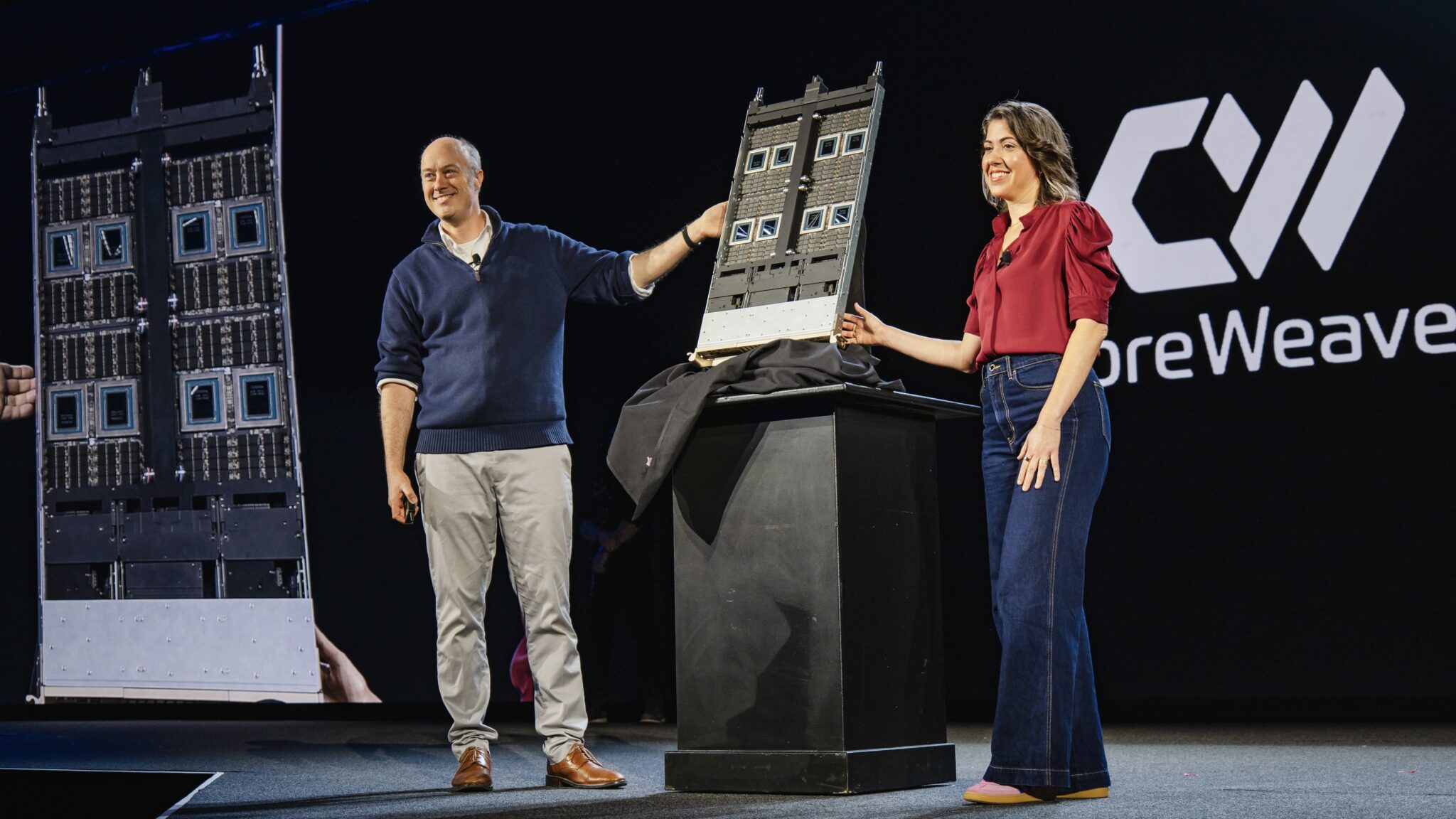
The announcements from the CoreWeave Fully Connected event in San Francisco — where the company unveiled deep integration of next-generation NVIDIA hardware (Vera Rubin architecture) with an AI-native cloud platform — represent far more than a tech industry news cycle. They constitute a strategic market signal that every CIO, CTO, and business owner should interpret as an instruction manual for the new computational era.
Over nearly a decade of co-engineering with NVIDIA, CoreWeave built a platform where compute, networking, and software were designed not as a generic public cloud, but as infrastructure native to AI workloads. The result is the ability to close the loop: from model training through fine-tuning to production deployment of agentic AI — without changing vendors, without sacrificing performance at system boundaries.
For enterprises and IT departments globally, this shift carries concrete strategic consequences:
- The barrier to entry for production AI has dropped dramatically — meaning competitors will deploy agents faster than ever before.
- Lacking an AI infrastructure strategy is now a business risk, not merely a technical oversight.
- Models priced on tokens and GPU-hours are replacing traditional software licenses — boards must understand the new cost economics.
- Agentic AI in production environments demands a different architecture than pilot chatbots — and a fundamentally different security posture.
This article does not summarize the San Francisco announcements. Instead, as Chief IT Architect with over 23 years of experience building mission-critical systems for business, I translate the global trend into concrete architecture, an implementation checklist, and an ROI calculation you can bring to your next board meeting.
2. Deep Technical Analysis and Risk Vectors
How Agentic AI Differs from Traditional ML
First-generation predictive models — classifiers, regressors, even early stateless LLMs — were architecturally predictable: batch job, model, output. Agentic AI is an entirely different paradigm: the system autonomously plans multi-step tasks, invokes external tools (APIs, databases, ERP systems), makes conditional decisions, and iterates in a loop without continuous human supervision.
This represents a fundamental shift in infrastructure requirements:
- Latency becomes critical — an agent invoking 15 tool steps at 500 ms per step generates 7.5 seconds of wait time. At 100 ms: 1.5 seconds. This difference determines product viability.
- Session state must be persistent and consistent — the agent "remembers" context between steps; a transactional consistency failure can result in duplicate orders, incorrect invoices, or data leaks.
- Inference throughput ≠ training throughput — a GPU cluster optimized for training (large batches, FP16, NVLink) behaves differently than inference infrastructure (small batches, low latency, many parallel sessions). Many organizations fall into the trap of using the same resources for both workloads.
- Token costs grow non-linearly — an agent with an extensive context window (RAG + step history) generates many times more tokens than a simpler model. Without monitoring, costs can explode within 24 hours.
Key Infrastructure Risk Vectors
Single Point of Failure in the orchestration layer: if the agent orchestrator (LangChain, CrewAI, custom implementation) fails, all parallel sessions fail simultaneously. In production, lack of clustering at this layer is an SLA catastrophe.
Data exfiltration via prompt injection: an agent with access to internal databases (ERP, CRM, HR) is an attack vector for prompt injection — a malicious user can trick the model into revealing confidential data through crafted input. This is not a theoretical risk; the first production incidents have already been reported in the financial sector.
Vendor lock-in at model and infrastructure level: choosing a single model provider and single GPU cloud without an exit strategy can result in dependency comparable to legacy ERP from the 1990s. Architecture should assume model replaceability from day one.
Lack of agent decision auditability: in regulated environments (finance, healthcare, waste processing), every system decision must be reconstructable. Default agent implementations do not log the full tool call chain.
Model artifact storage issues: fine-tuned models weigh tens of gigabytes; without proper artifact management (MLflow, DVC, S3-compatible storage), versioning becomes impossible and rollback after a faulty deployment becomes catastrophically slow.
3. Solution Architecture and Step-by-Step Implementation Guide
Reference Production Architecture for Enterprise Agentic AI
Below is a proven reference architecture for enterprises deploying agentic AI in production. The architecture assumes a hybrid environment: private on-premise infrastructure (Proxmox VE + GPU) plus public cloud (AWS/GCP) for elastic inference scaling.
┌─────────────────────────────────────────────────────────┐
│                      ACCESS LAYER                        │
│  API Gateway (Kong/Traefik) + WAF + Rate Limiting        │
│  mTLS between services | OAuth2 / OIDC                   │
└──────────────────────────┬──────────────────────────────┘
                           │
┌──────────────────────────▼──────────────────────────────┐
│               AGENT ORCHESTRATION LAYER                  │
│  Agent Orchestrator (HA, min. 3 instances)               │
│  Task Queue: Redis Cluster / RabbitMQ                    │
│  Session Store: PostgreSQL 16 (ACID) + pgvector          │
│  Vector DB: Qdrant / Weaviate (HA mode)                  │
└──────────────────────────┬──────────────────────────────┘
                           │
┌──────────────────────────▼──────────────────────────────┐
│                 INFERENCE LAYER (GPU)                    │
│  On-prem: Proxmox VE + GPU passthrough (A100/H100)       │
│  vLLM / Triton Inference Server                          │
│  Load Balancer: HAProxy (health checks /health)          │
│  Autoscaling: k3s / Kubernetes HPA                       │
│  Cloud burst: AWS p4d / GCP A3 (spot instances)          │
└──────────────────────────┬──────────────────────────────┘
                           │
┌──────────────────────────▼──────────────────────────────┐
│               DATA AND INTEGRATION LAYER                 │
│  ERP (mojafirma.io API), CRM, Inventory                  │
│  PostgreSQL + TimescaleDB (logs, metrics, audit)         │
│  MinIO S3 (model artifacts, embedding backups)           │
│  MLflow (model registry + experiment tracking)           │
└──────────────────────────┬──────────────────────────────┘
                           │
┌──────────────────────────▼──────────────────────────────┐
│              MONITORING AND OBSERVABILITY                │
│  Prometheus + Grafana (GPU util, latency, tokens/s)      │
│  Loki (agent logs) | Jaeger (distributed tracing)        │
│  Alertmanager → PagerDuty / SMS                          │
└─────────────────────────────────────────────────────────┘
Step 1: Base Infrastructure Setup (Proxmox VE + GPU)
# Debian 12 (Bookworm) — NVIDIA driver installation
apt update && apt install -y linux-headers-$(uname -r) build-essential
wget https://developer.download.nvidia.com/compute/cuda/repos/debian12/x86_64/cuda-keyring_1.1-1_all.deb
dpkg -i cuda-keyring_1.1-1_all.deb
apt update && apt install -y cuda-toolkit-12-4 nvidia-driver-550

# Verify installation
nvidia-smi

# IOMMU for GPU passthrough in Proxmox (grub config)
sed -i 's/GRUB_CMDLINE_LINUX_DEFAULT="quiet"/GRUB_CMDLINE_LINUX_DEFAULT="quiet intel_iommu=on iommu=pt"/' /etc/default/grub
update-grub && reboot
Step 2: vLLM Inference Server with HA
# docker-compose.yml — vLLM inference server (Llama-3 example)
version: '3.8'
services:
  vllm-primary:
    image: vllm/vllm-openai:latest
    runtime: nvidia
    environment:
      - NVIDIA_VISIBLE_DEVICES=0,1
    command: >
      --model meta-llama/Llama-3-70b-instruct
      --tensor-parallel-size 2
      --max-model-len 32768
      --gpu-memory-utilization 0.90
      --enable-prefix-caching
      --served-model-name llama3-enterprise
    ports:
      - "8000:8000"
    volumes:
      - /data/models:/root/.cache/huggingface
    healthcheck:
      test: ["CMD", "curl", "-f", "http://localhost:8000/health"]
      interval: 30s
      timeout: 10s
      retries: 3
    deploy:
      resources:
        reservations:
          devices:
            - capabilities: [gpu]
Step 3: 3-2-1 Backup Rule for AI Artifacts
Fine-tuned models, vector databases, and MLflow registries must be covered by a 3-2-1 backup strategy:
- 3 copies: production copy + local backup (MinIO on-prem) + remote backup (AWS S3 / Backblaze B2)
- 2 media types: local NVMe disks + remote object storage
- 1 offsite copy: encrypted copy in a geographically separate location (min. 200 km from primary DC)
# Model backup script to MinIO (cron, daily at 02:00)
#!/bin/bash
TIMESTAMP=$(date +%Y%m%d_%H%M%S)
MODEL_DIR="/data/models/fine-tuned"
MINIO_BUCKET="s3://ai-models-backup"

# Backup with MD5 checksum verification
mc mirror --overwrite --md5 $MODEL_DIR ${MINIO_BUCKET}/$(hostname)/${TIMESTAMP}/
echo "Backup completed: ${TIMESTAMP}" >> /var/log/ai-backup.log

# DR test — verify read access weekly (separate cron)
# mc ls ${MINIO_BUCKET} --recursive | tail -1 | awk '{print $5}' | xargs mc cat > /dev/null
4. Engineering Implementation and Audit Checklist
- ☐ GPU and driver inventory: verify CUDA Toolkit compatibility with the chosen inference framework (vLLM, TGI, Triton). Version mismatches are the most common cause of failed deployments.
- ☐ Network segmentation: inference API must not be directly internet-accessible — require routing through an API Gateway with WAF and rate limiting (max N req/min per API token key).
- ☐ Orchestrator HA configuration: minimum 3 agent instances behind a load balancer; quarterly failover test (shut down one instance and measure traffic takeover time).
- ☐ Audit trail for all tool calls: every agent tool call logged to immutable storage (append-only log in PostgreSQL or Loki with minimum 12-month retention).
- ☐ Cost limits at API level: set hard token/day limits per project and per user; alert at 80% budget consumption.
- ☐ Prompt injection testing: before production, conduct security testing (red teaming) with a set of adversarial prompts; document results and implemented mitigations.
- ☐ Model versioning in MLflow: every model deployment registered with version tag, code commit hash, and quality benchmark results (MMLU, custom eval sets).
- ☐ Disaster Recovery test: every 6 months, full test of AI infrastructure restoration from snapshot (RTO < 4h, RPO < 1h for production systems).
- ☐ GPU utilization and P99 latency monitoring: alerts when GPU util < 30% (resource waste) or P99 latency exceeds defined SLA (e.g., 2000 ms for ERP agent).
- ☐ GDPR and data localization: personal data processed by agents never leaves the EEA; private model instances on-premise or in European cloud regions (eu-central-1 AWS, europe-west4 GCP).
- ☐ Dependency pinning: all library versions (transformers, langchain, vllm) locked in requirements.txt/pyproject.toml; automatic CVE scanning on every CI/CD build.
- ☐ 12-month capacity planning: projection of agent count growth and token volume; reserve 30% surplus GPU capacity for burst traffic.
5. Legal, Tax and Regulatory Compliance Requirements
NIS2 Directive and AI Systems in Critical Infrastructure
The NIS2 Directive covers cloud providers, managed service providers, and operators of critical information systems. Enterprises deploying agentic AI in critical processes (finance, logistics, healthcare, energy) must:
- Conduct a NIS2 risk assessment for new AI systems before production deployment.
- Implement incident management with mandatory notification to competent authorities within 24 hours of detecting a significant incident.
- Ensure supply chain security — risk assessment of AI model providers (including open-source models downloaded from HuggingFace).
DORA Regulation (Financial Sector)
From January 17, 2025, financial sector entities are subject to DORA (Digital Operational Resilience Act). Agentic AI used in financial processes (automated invoicing, credit risk analysis, algorithmic trading) must comply with:
- Operational resilience testing (TLPT — Threat-Led Penetration Testing) at least once every three years.
- ICT risk management with documentation of AI system architecture.
- ICT provider contract registry — including language model API providers.
GDPR and Personal Data Processing by AI Agents
An AI agent processing personal data (customer names, tax IDs, transaction data) is a data controller or processor under GDPR. Key requirements:
- Legal basis for processing must be defined before launching the agent (Art. 6 GDPR).
- Prohibition on data transfer outside EEA without appropriate safeguards (SCCs, BCRs) — applies to sending data to model APIs hosted outside the EU.
- Right to explanation of decisions (Art. 22 GDPR) — if an agent makes decisions with significant impact on individuals (e.g., credit denial), an explainability mechanism (XAI) is required.
EU AI Act
The EU AI Act is being phased in between 2024 and 2027. High-risk AI agents (employment, education, critical infrastructure, justice) require mandatory conformity assessment, registration in the EU database, and audit by a notified body. Organizations should begin classifying their AI systems by risk category now.
6. Cost Analysis (TCO) vs Return on Investment (ROI)
Cost Model — On-Premise AI Infrastructure vs Cloud
The build vs buy decision for AI infrastructure is more complex than for traditional systems. Below is a sample TCO calculation for a 200-employee company deploying an AI agent in back-office processes:
Scenario A — Public cloud (external API):
Token cost: 50M tokens/month × $0.003/1K = $150/month
Additional: monitoring, API gateway, dev hours = $500/month
Total: ~$650/month ($7,800/year)
Scenario B — On-premise GPU (A100 40GB SXM4):
CAPEX: 1× A100 server = ~$65,000 (5-year depreciation = $13,000/year)
OPEX: energy (~$200/month), administration (1 day/month engineer) = ~$700/month
Total Year 1: ~$21,400 | Year 3+: ~$8,400/year
Board-level conclusion: below 100M tokens/month and fewer than 3 models, public cloud (external APIs) has lower TCO. Above this threshold — or where GDPR/security requirements block external APIs — on-premise GPU investment becomes profitable within 18–24 months.
ROI from AI Agent Deployment in Operational Processes
Our enterprise deployments demonstrate the following typical savings:
- Invoice processing automation (AP/AR): 70–80% reduction in handling time → savings of 2–4 FTEs annually → positive ROI after 6–9 months.
- Technical support agent (Tier 1): handling 60–80% of queries without human involvement → 40–60% reduction in support desk costs.
- Reporting and compliance automation: generating tax reports, inventory summaries in seconds instead of hours → elimination of human errors (average cost of a tax filing error: €1,000–€10,000 in penalties plus correction costs).
7. Frequently Asked Questions (FAQ)
Can a company without an in-house AI team deploy a production agent?
Yes, provided the right technology partnership is in place. The key ingredients are: proven server infrastructure (or access through a trusted managed services provider), a clearly defined business use case, and a security testing process. Many of our SME deployments started with a unified API (OpenAI/Claude) on managed cloud infrastructure, gradually migrating to private models as token volume and security requirements grew.
How do you ensure high availability (HA) for a production AI agent?
HA architecture for agentic AI requires clustering at every layer: orchestration (min. 3 replicas), task queuing (Redis Sentinel or Cluster), vector database (Qdrant in distributed mode), and inference layer (min. 2 GPU nodes behind a load balancer). Critical is implementing health checks with automatic restart of non-responding services (Kubernetes liveness/readiness probes or docker-compose healthcheck). 99.9% SLA additionally requires a tested quarterly failover drill.
How do you control inference costs to avoid unexpected spending?
Token cost control requires a multi-layer approach: (1) per-user and per-project limits at the API Gateway level, (2) real-time monitoring of token consumption (Prometheus gauge + Grafana alert at 80% budget), (3) prompt and context optimization (shortened system prompts, prefix caching in vLLM, INT8/AWQ model quantization), (4) scheduling batch tasks during off-peak hours. A well-configured architecture can reduce token consumption by 40–60% without quality degradation.
What are the minimum hardware requirements for a private enterprise-grade LLM?
For a 7B model (Mistral 7B, Llama 3 8B), a single GPU with 24GB VRAM (e.g., RTX 4090 or A10G) is sufficient — appropriate for pilots and low traffic (up to 10 concurrent users). For a 70B model (Llama 3 70B, Mixtral 8×7B), you need at minimum 2× A100 80GB or 4× A100 40GB (tensor parallelism). For enterprise production environments, we recommend at minimum 4× H100 80GB with NVLink for 70B+ models, delivering inference throughput above 100 tokens/second per user at low latency. CPU servers should not be considered as a GPU alternative in production — this is only viable for quantized models (GGUF, Q4) with very low traffic.
8. Dedicated Solutions and Implementation in the AbejaIT Ecosystem
At AbejaIT, we don't sell AI as a buzzword. For over 23 years, we have been building mission-critical systems for businesses — and we know that technology must solve concrete business problems, not create new ones. Our approach to agentic AI deployments is grounded in proven infrastructure and integration with systems organizations already operate.
If you run a scrap metal or secondary raw materials collection facility, the ESSW system (zlom.io) integrates with AI agents automating material classification, waste documentation generation, and cash settlement processing — eliminating manual data entry and human errors at weighbridges. Similarly, the wegiel.io platform can be extended with AI agents automating delivery document generation and excise duty declarations.
For companies using the mojafirma.io ERP system, AI agent integration opens possibilities for automated processing of incoming e-invoices, intelligent payment reconciliation, and proactive overdue receivables monitoring — without replacing the existing financial system.
Allotment garden associations using dzialkowiec.io can deploy an AI agent answering member queries 24/7 and automating fee calculations when energy tariffs change.
Regardless of industry, proven infrastructure is the foundation. We offer comprehensive server administration and IT infrastructure services — from GPU architecture design through Proxmox VE HA cluster deployment to 24/7 monitoring and incident response. For organizations planning AI deployments, we also prepare AI infrastructure readiness audits and implementation roadmaps tailored to budget and organizational scale. Explore our full range of AI solutions and agent deployments to see how we can accelerate your AI journey.
If you want to close the loop between AI ambition and production reality — contact our engineering team. We'll show you how many concrete processes in your organization can be automated within 90 days and with what ROI.
Source reference: NVIDIA Blog