

1. Market Context and Business Framework (Executive Summary)
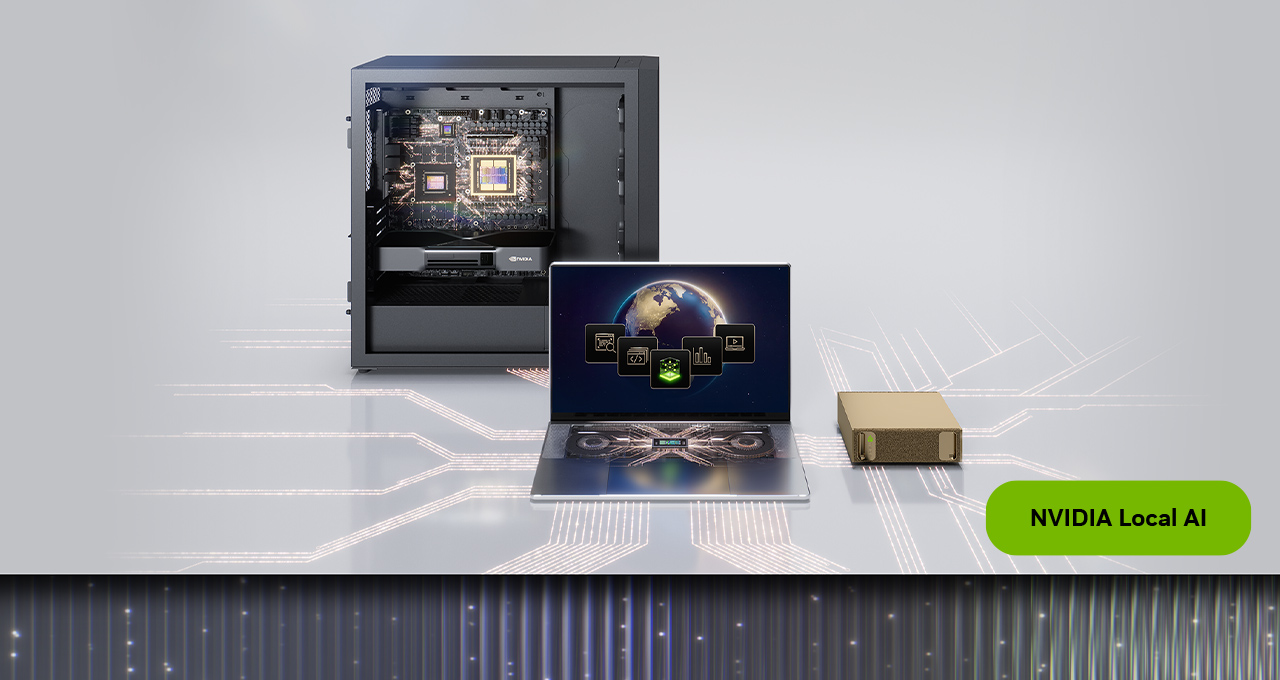
At GTC Berlin, NVIDIA unveiled its complete local AI hardware lineup: RTX Spark — a compact personal AI supercomputer powering agents directly on Windows PCs; DGX Spark — a Linux-based developer platform for building and scaling AI applications; and DGX Station — an enterprise-grade workstation for running frontier models on Linux, with a Windows version arriving in December. This announcement is not another GPU marketing demonstration — it is a strategic signal for boards, CTOs and IT managers: the era of mainstream local AI infrastructure in enterprise environments has begun.
For the past three years, local large language models (LLMs) were the domain of specialised research labs and large corporations with their own data centres. The cost of entry — both financial and in terms of expertise — was disproportionately high for small and medium-sized businesses. The launch of RTX Spark and DGX Spark disrupts this paradigm. For the first time in history, a device in the "personal AI supercomputer" class fits on a desk, costs comparably to a high-end workstation, and simultaneously delivers the computational throughput necessary to run 70-billion parameter models in real time.
For Polish and European enterprises — scrap metal buyers, coal depots, manufacturing firms, accounting offices and allotment garden associations — this creates concrete strategic questions: Should we process company data locally or in the cloud? How do we connect local AI infrastructure with existing ERP and warehouse management systems? What are the legal, cost and security risks? These are the questions we answer in this article — drawing on over 23 years of engineering practice at AbejaIT.
Core thesis: Local AI is not a technology gadget — it is critical infrastructure that requires the same architectural rigour as production servers: capacity planning, redundancy, backup, monitoring and regulatory compliance.
2. Deep Technical Analysis and Risk Vectors
2.1 Local AI Infrastructure Architecture — How It Differs from Cloud
Running language models on-premises is fundamentally different from consuming cloud APIs (OpenAI, Google Cloud AI, AWS Bedrock). With cloud solutions, data leaves organisational boundaries and is processed on the vendor's servers — creating GDPR implications, intellectual property risks and dependency on third-party SLA agreements. Local infrastructure eliminates these concerns but transfers full operational and security responsibility to the organisation.
RTX Spark is based on NVIDIA's Blackwell architecture with the GB10 Grace Blackwell Superchip, offering 128 GB of unified memory (LPDDR5X) at 273 GB/s bandwidth — enabling 70B models to be loaded and inferenced entirely in memory, eliminating costly swap operations. DGX Spark extends this philosophy to a developer platform with multi-node clustering via NVIDIA ConnectX-8, while DGX Station is a full enterprise workstation with redundant power supplies and liquid cooling.
2.2 Risk Vectors in Local AI Deployment
Deploying local AI infrastructure generates specific risk vectors that boards and IT directors must account for at the planning stage:
- Physical and environmental risk: DGX Station-class devices draw between 600 W and 1.6 kW of continuous power. A standard SMB server room unprepared for such thermal load is a direct path to power failure or thermal shutdown. A dedicated, air-conditioned rack or liquid cooling solution is required.
- Model weights data loss: Language models fine-tuned on proprietary company data (e.g. scrap metal price lists, warehouse documentation) are intellectual assets. A lack of model weight backup means losing months of work and thousands of euros of computational investment.
- Attacks on model API interfaces: Local model servers (Ollama, vLLM, LM Studio Server) are frequently started without authentication on default ports (11434, 8000). In a corporate network without segmentation, every employee — or an attacker who compromised their workstation — can send queries to the model and exfiltrate sensitive data through prompt injection.
- Model hallucinations in critical processes: A language model applied to automated invoice verification, excise duty calculation on coal products or generating waste transfer cards can make errors with one hundred percent confidence. A lack of human verification layer is a financial and legal risk.
- Model staleness: Models do not self-update. A model deployed in 2024 will have no knowledge of regulatory changes from 2025 — unless a RAG (Retrieval-Augmented Generation) system with an up-to-date knowledge base has been implemented.
- Business continuity risk: A local AI node failure without redundancy halts all automation processes. Unlike cloud environments where the vendor SLA is 99.9%, a local node without HA clustering is a Single Point of Failure.
3. Solution Architecture and Step-by-Step Deployment Guide
3.1 Reference Architecture for SMEs (High Availability Local AI)
Based on over 23 years of server deployment experience, AbejaIT recommends the following reference architecture for an SME-class enterprise deploying local AI:
- Compute layer: 1–2 GPU nodes (NVIDIA RTX 4090 / RTX 5090 / DGX Spark), virtualised via Proxmox VE 8.x or Kubernetes (k3s for SMEs)
- Model storage layer: local NAS with ZFS (RAIDZ2), minimum 4 TB capacity for model weights and training data
- Model server layer: Ollama or vLLM behind a reverse proxy (Nginx/Caddy) with API key authentication
- RAG layer: Qdrant or Weaviate vector database with company documents (price lists, regulations, procedures)
- Monitoring layer: Prometheus + Grafana with alerts on GPU utilisation, VRAM pressure, temperature and API latency
- Backup layer: 3-2-1 rule for model weights — local copy (NAS), second-medium copy (LTO or secondary NAS), offsite copy (encrypted cloud)
3.2 Installing and Securing an Ollama Server in a Production Environment
# 1. Install Ollama on Debian 12 / Ubuntu 22.04
curl -fsSL https://ollama.com/install.sh | sh

# 2. Configure listening on localhost only (not 0.0.0.0!)
sudo systemctl edit ollama.service
# Add under [Service]:
# Environment="OLLAMA_HOST=127.0.0.1:11434"

# 3. Restart and verify
sudo systemctl daemon-reload && sudo systemctl restart ollama
ss -tlnp | grep 11434
# Expected: 127.0.0.1:11434

# 4. Nginx reverse proxy with Basic Auth
sudo apt install nginx apache2-utils -y
htpasswd -c /etc/nginx/.htpasswd ai_user

# /etc/nginx/sites-available/ollama-proxy
server {
    listen 443 ssl;
    server_name ai.yourcompany.com;
    ssl_certificate /etc/letsencrypt/live/ai.yourcompany.com/fullchain.pem;
    ssl_certificate_key /etc/letsencrypt/live/ai.yourcompany.com/privkey.pem;

    location / {
        auth_basic "AI API";
        auth_basic_user_file /etc/nginx/.htpasswd;
        proxy_pass http://127.0.0.1:11434;
        proxy_set_header Host $host;
        proxy_read_timeout 300s;
    }
}

# 5. Pull a model (e.g. Mistral 7B)
ollama pull mistral:7b-instruct

# 6. GPU monitoring (NVIDIA)
watch -n 2 nvidia-smi --query-gpu=name,temperature.gpu,utilization.gpu,memory.used,memory.total \
  --format=csv,noheader
3.3 Model Weights Backup Configuration (3-2-1 Rule)
# Backup Ollama model directory to remote NAS via rsync
OLLAMA_MODELS="/usr/share/ollama/.ollama/models"
BACKUP_DEST="[email protected]:/mnt/pool/ai-models-backup"
TIMESTAMP=$(date +%Y%m%d_%H%M%S)

rsync -avz --checksum \
  --log-file="/var/log/ollama-backup-${TIMESTAMP}.log" \
  "${OLLAMA_MODELS}/" \
  "${BACKUP_DEST}/${TIMESTAMP}/"

# Verify checksums after backup
find "${OLLAMA_MODELS}" -type f -name "*.bin" -o -name "*.gguf" \
  | xargs sha256sum > /var/log/models-checksums-${TIMESTAMP}.txt

echo "Backup completed: $(date)" | mail -s "AI Model Backup OK" [email protected]
4. Engineering Implementation and Audit Checklist
The following checklist must be verified by the IT administrator and project manager before production launch of local AI infrastructure:
- ✅ Network segmentation: AI node placed in a dedicated VLAN, isolated from end-user and production ERP networks via firewall rules (iptables/nftables or hardware UTM).
- ✅ API authentication: Model server (Ollama/vLLM) listens exclusively on localhost; external access only through reverse proxy (Nginx/Caddy) with API Key or OAuth2. No anonymous access permitted.
- ✅ Data encryption at rest: Disks containing model weights and training data are encrypted (LUKS2 on Linux or BitLocker on Windows).
- ✅ 3-2-1 backup of model weights: Confirmed copies on 3 media types (local NAS + external drive + encrypted cloud); restoration test performed and documented.
- ✅ GPU and system monitoring: Prometheus + nvidia-smi exporter + Grafana with alerts on temperature > 80°C, VRAM > 90%, disk I/O saturation.
- ✅ Model version management: Model version tagging system (e.g. via DVC or a simple Git registry) enabling rollback to a previous version in under 30 minutes.
- ✅ RAG knowledge base updates: Scheduled automatic re-ingestion of company documents into the vector database (at least weekly or on every price list or procedure change).
- ✅ Query log retention policy: Model query logs stored with encryption; retention period compliant with GDPR policy (maximum retention time justified by the processing purpose).
- ✅ Disaster recovery test: Documented and tested scenario for restoring the entire AI node from backup within the RTO (Recovery Time Objective) established for the business process.
- ✅ Data Protection Impact Assessment (DPIA): Formal assessment conducted under Art. 35 GDPR if the model processes personal data of employees, customers or contractors.
- ✅ Prompt injection procedure: Input filtering rules implemented (whitelist of permitted operations, blocking system instructions in user-facing fields) for models accessible via web interface.
- ✅ Emergency power (UPS): AI node connected to UPS with at least 15 minutes autonomy + graceful shutdown procedure on power loss (script integrating apcupsd or NUT).
5. Legal, Tax and Regulatory Compliance Requirements
5.1 NIS2 Directive and Local AI Infrastructure
The NIS2 Directive (transposed into Polish law through an amendment to the National Cybersecurity System Act) imposes cybersecurity risk management obligations on important and essential entities. Deploying local AI infrastructure that processes operational business data qualifies as an ICT asset subject to NIS2 requirements for: asset inventory, risk assessment, backup and business continuity policies, and incident reporting to CSIRT NASK within 24 hours of detection.
5.2 GDPR and Personal Data Processing by Local Models
Local processing of data by AI models does not automatically eliminate GDPR obligations. If the language model processes personal data (e.g. a scrap buyer's customer name and surname, employee data, transaction history with a natural person's identifier), the organisation must: document the legal basis for processing (Art. 6 GDPR), conduct a DPIA (Art. 35 GDPR) if the processing is high-risk, ensure encryption of data at rest and in transit, and implement a data retention and deletion policy for model logs.
5.3 DORA Regulation for the Financial Sector
Enterprises in the financial sector (including factoring companies serving scrap buyers, accounting offices) subject to the DORA Regulation (Digital Operational Resilience Act, applicable from 17 January 2025) must treat local AI infrastructure as a critical ICT asset subject to the full regime of resilience testing, incident management and technology vendor risk assessment (including the GPU manufacturer and model software vendor).
5.4 EU AI Act Regulations
The EU Artificial Intelligence Act (entering into force in phases between 2024–2027) classifies AI systems by risk level. Local AI applications in enterprises for document automation, procurement decision support or raw material price analysis generally fall into the low or limited risk category. However, using AI to make decisions about employees (e.g. performance analysis) or to automatically reject transactions (customer scoring for scrap buyers) may be classified as high risk, requiring registration with the EU AI Office and implementation of an AI risk management system.
6. Total Cost of Ownership (TCO) vs Return on Investment (ROI)
6.1 Three-Year TCO Analysis
Let us compare three scenarios for an SME executing approximately 10,000 AI queries per month (document handling, decision support, correspondence automation):
- Scenario A — Cloud API only (GPT-4o / Claude 3.5): Cost ~$0.05–0.15 per 1,000 output tokens. At intensive usage (20M tokens/month): $1,000–3,000/month = $36,000–108,000 over 3 years. Plus: risk of vendor price increases, no data control, dependency on external SLA.
- Scenario B — Local AI node (RTX 5090 / DGX Spark): Hardware cost: $15,000–25,000 one-time. Energy: ~2,400 kWh/year × €0.20 = ~€480/year. Administration: 4h/month senior IT × ~€60/h = ~€240/month. 3-year TCO: ~€33,000–43,000. Break-even point: approximately 14–18 months when replacing cloud API.
- Scenario C — Hybrid model (local small model + API for complex tasks): Optimal for most SMEs. 7–13B models locally for routine tasks, cloud API for tasks requiring advanced reasoning. Reduces API costs by 70–80%, retains flexibility for edge cases.
6.2 Hidden Costs of Lacking AI Automation
Analysis from 23 years of AbejaIT practice shows that manual processes that local AI can replace generate the following hidden costs:
- Manual invoice verification and transcription: 2–4 employee hours daily = €5,000–10,000 annually per FTE
- Errors in warehouse records and manual fee calculations: contractual penalties and tax corrections = €1,500–15,000/year (depending on scale)
- Customer query response time (without AI chatbot): lost contracts and customer churn — difficult to measure, but real
- Time spent manually searching technical documentation: 1–2 hours daily per employee × hourly rate
7. Frequently Asked Questions (FAQ)
Is local AI safer than cloud AI from a GDPR perspective?
It depends on implementation — not location. A local AI model can be just as dangerous as a cloud-based one if encryption, access controls and operation logging have not been implemented. The key difference is that with local processing, you have full control over the data path and can demonstrate to supervisory authorities that data has not left the organisation. Cloud computing, in turn, requires a data processing agreement (Art. 28 GDPR) with the vendor and reliance on their security mechanisms. For sensitive B2B sector data — such as scrap buyer customer records or coal product inventories — local AI infrastructure is recommended by AbejaIT as architecturally more secure.
Which language models perform best in a Polish-language business environment?
In 2025, the leading models for local deployment with strong Polish language support include: Mistral 7B / Mistral Large (excellent quality with low hardware requirements), Llama 3.1 70B (requires at least 48 GB VRAM but approaches GPT-4 in quality), Bielik-7B (the first open-source model dedicated to the Polish language, based on Mistral architecture, trained on a Polish-language corpus) and Gemma 3 27B from Google. For specialised tasks (analysis of legal documents, invoicing, tax records), AbejaIT recommends fine-tuning a selected base model on proprietary company data or implementing RAG with an up-to-date tax and regulatory knowledge base.
How do I integrate a local AI model with an existing ERP or warehouse management system?
Integration runs through an API layer: the model server (Ollama API on port 11434 or vLLM OpenAI-compatible API) is called by the ERP system's backend via standard HTTP/REST requests. In the case of the mojafirma.io system by AbejaIT, integration involves deploying an AI assistant module that combines context from live warehouse and financial data (via a secure internal API) with the language model's responses — without transmitting data outside the client's infrastructure. Critical to this is implementing a RAG system with a company document index (invoices, price lists, warehouse procedures) that provides the model with current business context instead of relying solely on training-time knowledge.
How do I plan capacity for an AI node in an SME?
The starting point is estimating the number of concurrent users and query characteristics. For a 7B model (e.g. Mistral 7B Q4_K_M, ~4 GB VRAM) on an RTX 4090 (24 GB VRAM), you can run up to 4–5 parallel model instances with reasonable latency (< 500 ms to first token). For a 70B model (Llama 3.1 70B Q4), you need a minimum of 48 GB VRAM — meaning at least two RTX 4090 cards or one A100/H100. AbejaIT's practical rule: plan VRAM at 2× actual demand, accounting for KV cache growth with long contexts (128K tokens), batch processing and future models with higher parameter counts. Monitoring VRAM pressure via nvidia-smi or Prometheus is mandatory from the day of production launch.
8. Dedicated Solutions and Deployment in the AbejaIT Ecosystem
AbejaIT has designed and deployed IT infrastructure for Polish enterprises for over 23 years — from scrap metal buyers to coal depots to cloud ERP systems. Introducing local AI into the AbejaIT client ecosystem is a natural evolutionary step — not a revolution for its own sake, but a concrete response to real operational needs.
Our approach to AI deployments is based on three pillars: data security (local processing without data leaving the organisation), integration with existing systems (without replacing working industry-specific software) and measurable ROI (we deploy only what genuinely reduces work time or eliminates errors that cost money).
In the scrap metal and secondary raw materials sector — the ESSW system (zlom.io) provides integration with vehicle weighbridges, BDO waste records and electronic KPO/KPOk waste transfer cards. An AI module in development will enable automatic classification of material fractions from photographs (computer vision) and intelligent purchase price suggestions based on transaction history and current exchange market rates.
For coal and solid fuel depots — the wegiel.io platform handles full coal product inventory, AKC-WW excise declarations and DDW delivery documents. The planned AI integration will enable automatic generation of tax declarations and pre-transaction data validation against weighbridge readings before transaction approval.
The mojafirma.io ERP system — with full integration with Poland's National e-Invoice System (KSeF) — is a natural platform for deploying an AI assistant for document workflow automation: incoming invoice verification, outgoing invoice generation, payment control and debt collection decision support. All in local or hybrid mode, without transmitting financial data to external APIs.
Allotment garden associations using the dzialkowiec.io platform will find AI module support for automated fee calculation, 24/7 chatbot responses to members' questions, and automatic generation of resolutions and general meeting minutes based on entered data.
All of the above deployments require stable, secure server infrastructure. The AbejaIT team provides comprehensive server and IT infrastructure administration — from architecture design through Proxmox VE cluster deployment and Docker containers to 24/7 monitoring with alerting and rapid incident response. If you are planning a local AI deployment in your organisation, we invite you to a consultation with the AbejaIT engineering team — a free needs analysis and architecture design tailored to your environment.
Detailed information about our AI solutions for business and IT auditing and consulting services is available in the dedicated sections of the AbejaIT website.
Source reference: NVIDIA Blog