

1. Market Context and Business Framework (Executive Summary)
In mid-2025, a senior engineer closely embedded in the circles of Anthropic, OpenAI and other leading AI laboratories stated something publicly that insiders have long known: even the people building language models struggle to internalize the pace at which they are improving. This is not rhetorical flourish — it is an engineering fact with profound strategic consequences.
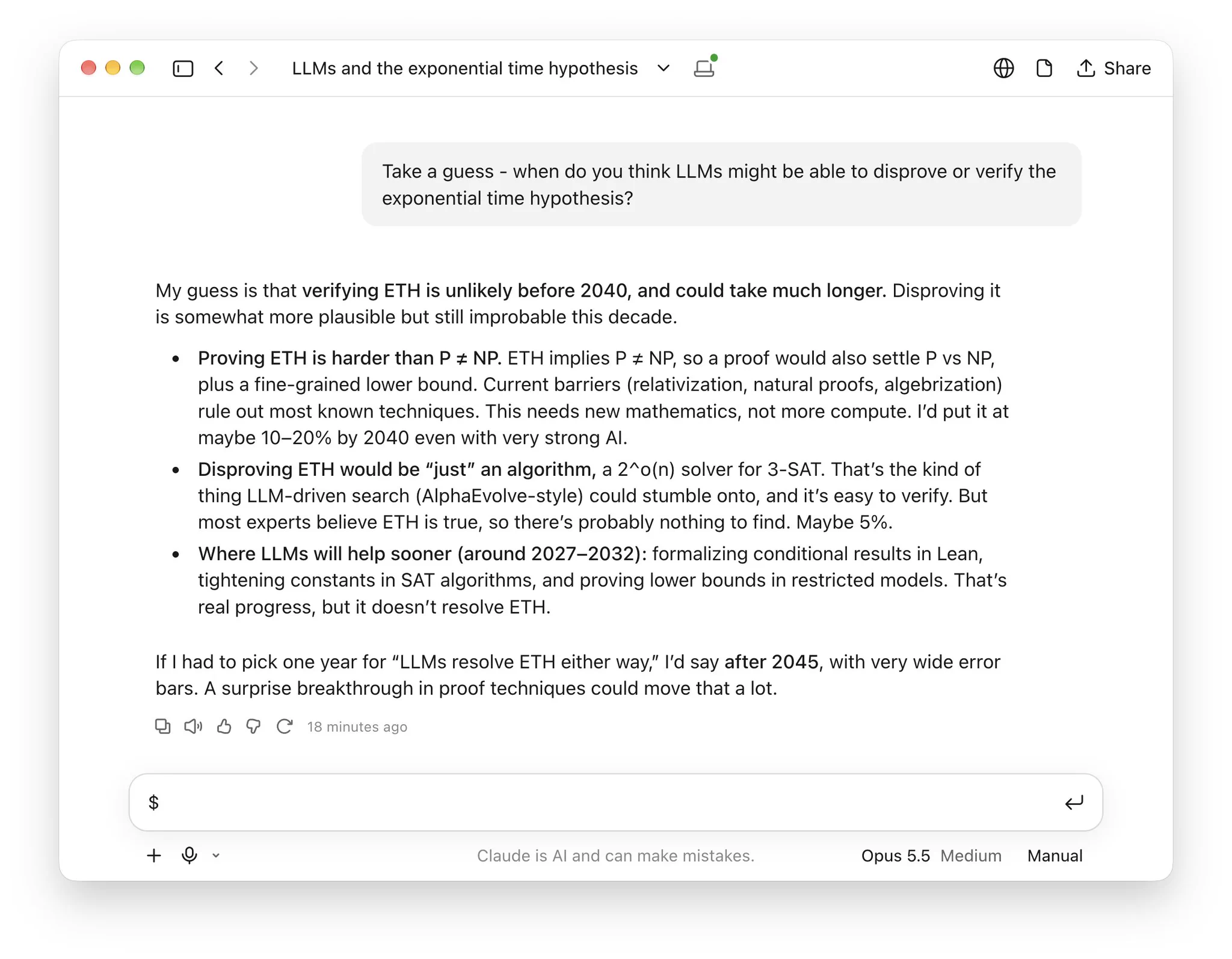
When Claude Opus 3 was asked to estimate when entire pull requests would be authored entirely by LLMs, it projected that milestone into the more distant future. Reality was already overtaking that prediction. This phenomenon — the systematic underestimation of an exponential curve — affects not only AI models themselves, but, more critically, business leaders, CIOs and boards of directors worldwide.
For a Chief IT Architect and CTO at AbejaIT — a company that has been designing B2B systems for the Polish and European market since 2003 — this signal is unambiguous: organizations that treat AI as a "technology to observe" rather than a "technology to deploy" are losing their strategic compass at an accelerating rate. This article is not a summary of social media commentary. It is an authoritative engineering and business guide for decision-makers who need to act — now.
Moore's Law was linear on a logarithmic scale. The improvement curve of large language models is exponential even on that scale. GPT-3 (2020) → GPT-4 (2023) → Claude 3 Opus → Claude 3.5 Sonnet → Claude 3.7 → the multimodal and agentic models of 2025: each leap represented not an incremental improvement, but a qualitative shift in capability class. For the boardroom and the CTO office, this means one thing: the AI planning horizon has collapsed from "3–5 years" to "the next 6–12 months".
2. Deep Technical Analysis and Risk Vectors
2.1. Anatomy of the Exponential Improvement Curve
Language models improve along several parallel axes simultaneously: parameter count, training data quality, architecture innovations (attention mechanisms, Mixture of Experts), RLHF/RLAIF alignment techniques, and compute infrastructure. Each of these axes has its own maturity curve, and their convergence creates a superposition effect — which is why external observers perceive "sudden leaps" that engineers inside the labs see as the inevitable result of compounding progress.
From an engineering standpoint, the key risk vectors for enterprises in this context are:
- Competency obsolescence risk: processes built on manual analytical work, coding and documentation will be automated faster than most organizations can redesign their workforce roles.
- Vendor lock-in risk: hasty SaaS AI deployments without RAG architecture and private model instances create dependency on external vendors and expose sensitive business data.
- Hallucination and data integrity risk: generative models without a retrieval layer (RAG) or factual verification can generate errors in legal documents, invoices or financial reports — with serious tax and legal consequences.
- Operational continuity risk: AI systems integrated into production processes without fallback mechanisms and 24/7 monitoring become a single point of failure (SPOF).
- Regulatory risk (GDPR / EU AI Act): the European AI Regulation imposes new classification obligations on AI systems — ignoring this aspect risks significant financial penalties.
2.2. Underestimating the Curve as a Cognitive Failure in Management
Cognitive psychologists have documented for decades the human inability to intuitively grasp exponential growth (the classic chessboard and rice grain thought experiment). In the context of AI, this cognitive bias translates into concrete, costly business decisions: deferred deployments, overly conservative R&D budgets, and strategies built around today's model capabilities rather than their 12-month trajectory.
As an architect of B2B systems, I observe this pattern in dozens of organizations every year. Companies that said in 2022 "AI is a curiosity, not a business tool" are paying double consulting rates in 2025, desperately trying to catch up.
3. Solution Architecture and Step-by-Step Implementation Guide
3.1. Reference AI Architecture for SMEs and Mid-Market Companies
Below is the reference AI deployment architecture we recommend at AbejaIT for B2B enterprises. It comprises four layers:
- Data Layer: PostgreSQL + pgvector for vector knowledge bases, MinIO for document storage, Apache Kafka for event streams.
- Model Layer: private model instance (e.g., LLaMA 3, Mistral, or dedicated fine-tune) on a Proxmox VE server with GPU pass-through, or API access to Claude/GPT-4 through a proxy gateway for cost control.
- RAG Layer (Retrieval-Augmented Generation): LangChain or LlamaIndex with indexing of company documentation, procedures, contractor databases and transaction history.
- Application Layer: REST/GraphQL API (Laravel + Vue.js) exposing AI capabilities to business users, with RBAC access control and full audit logging.
Example configuration of a vector database with pgvector on a Debian/Ubuntu server:
# Install pgvector extension
sudo apt-get install postgresql-15-pgvector

# In PostgreSQL console:
CREATE EXTENSION IF NOT EXISTS vector;

CREATE TABLE company_documents (
  id SERIAL PRIMARY KEY,
  title TEXT NOT NULL,
  content TEXT,
  embedding vector(1536),  -- for OpenAI/Claude-compatible models
  created_at TIMESTAMPTZ DEFAULT NOW()
);

-- HNSW index for approximate nearest-neighbor search
CREATE INDEX ON company_documents
  USING hnsw (embedding vector_cosine_ops)
  WITH (m = 16, ef_construction = 64);
3.2. Deploying a Private Model Instance with Ollama
# Install Ollama on Linux server with GPU (NVIDIA)
curl -fsSL https://ollama.com/install.sh | sh

# Pull and serve a model locally (example: Mistral 7B)
ollama pull mistral
ollama serve

# Test the API (default port 11434)
curl http://localhost:11434/api/generate \
  -d '{"model": "mistral", "prompt": "Analyze this VAT invoice:", "stream": false}'
3.3. Backup and Disaster Recovery for AI Systems
The 3-2-1 rule applied to AI environments: 3 copies of data (model weights, vector databases, configurations), on 2 different media types (local NAS + S3-compatible cloud), with 1 copy offsite (e.g., Backblaze B2 or AWS S3 Glacier). Full AI environment restoration tests at least once per quarter, with documented RTO (Recovery Time Objective) and RPO (Recovery Point Objective) targets.
4. Engineering Implementation and Audit Checklist
- ✅ Process inventory: identify a minimum of 5 repeatable business processes that can be AI-automated within 90 days.
- ✅ Data classification: assess the sensitivity of company data and decide which data can go to an external API vs. which requires an on-premise model.
- ✅ RAG architecture: deploy a vector database (pgvector/Chroma/Weaviate) and index key documents (procedures, price lists, contracts).
- ✅ API gateway with rate limiting: set rate limits and cost caps at the API gateway level — protect against uncontrolled token spending.
- ✅ Logging and audit trail: every model query should be logged (prompt, response, user, timestamp, token cost) in an audit database.
- ✅ RBAC access control: different user roles access only contextually appropriate AI knowledge (e.g., sales staff cannot access HR data in RAG).
- ✅ Hallucination testing: define a test set of questions with verifiable answers and run them after every model update or RAG database change.
- ✅ 24/7 monitoring: integrate AI metrics (response latency, errors, cost/day) with Zabbix or Prometheus/Grafana dashboards.
- ✅ Fallback plan: every AI-assisted process must have a defined manual workflow for when the AI service is unavailable or degraded.
- ✅ EU AI Act compliance assessment: classify the AI system according to the regulation's risk categories and document the risk assessment.
- ✅ Team training: minimum 4-hour training in prompt engineering and AI security for all AI system users in the organization.
- ✅ AI Disaster Recovery test: verify full restoration of the AI environment (model + vector DB + API) from backup within a measured timeframe (target RTO < 4 hours).
5. Legal, Tax and Regulatory Compliance Requirements
5.1. EU AI Act — New Obligations from 2025
Regulation (EU) 2024/1689 — the EU AI Act — entered into force on 1 August 2024, with staggered application dates for different provisions. Key points for European businesses:
- High-risk AI systems (including AI in recruitment, credit scoring, critical infrastructure) require registration in the EU database, conformity assessment and technical documentation.
- General-purpose AI models (GPAI) — including Claude, GPT-4, Gemini — are subject to transparency obligations toward end users.
- Absolute prohibitions (from February 2025): social scoring, subliminal manipulation, real-time biometric identification in public spaces.
- Penalties: up to €35 million or 7% of global turnover for violation of prohibitions; up to €15 million / 3% of turnover for other violations.
5.2. GDPR and Personal Data Processing by AI Models
Sending personal data to external APIs (OpenAI, Anthropic) requires a Data Processing Agreement (DPA) and, where applicable, a transfer impact assessment for data moving outside the EEA. We recommend architectures in which personal data is anonymized or pseudonymized before being sent to any external model, or using on-premise models for sensitive contexts.
5.3. NIS2 and AI System Continuity
The NIS2 Directive covers an increasingly broad set of entities. If AI systems are integral to the critical operation of an organization, they require documented business continuity plans and incident reporting to the relevant CSIRT authority. Organizations should align their AI infrastructure with NIST AI RMF and CIS Benchmark controls for AI-adjacent systems.
6. Total Cost of Ownership (TCO) vs. Return on Investment (ROI)
6.1. The Cost of Not Deploying AI
The calculation is straightforward, though frequently absent from boardroom strategies. Consider a typical operations department with 10 employees performing analytical, documentation and communication work:
- Average fully-loaded employee cost: €2,000–€3,500/month depending on country and role.
- Estimated share of work automatable by AI: 30–50% (McKinsey Global Institute, 2024).
- Potential annual savings (at 40% automation, 10 employees): €96,000–€168,000/year.
- Cost of AI deployment (RAG architecture + integrations + training): €10,000–€30,000 one-time + €500–€1,500/month maintenance.
- ROI: full payback within 3–8 months.
6.2. The Hidden Cost of Hallucinations Without Proper Architecture
Deploying AI without a RAG layer, logging and output verification can generate significant hidden costs: erroneous data in legal documents, incorrect tax regulation interpretations, errors in customer-facing communications. We estimate that a single AI hallucination incident in a critical business document can cost anywhere from €1,000 to hundreds of thousands of euros, depending on the legal and financial context.
AbejaIT principle: AI without auditing is not automation — it is scaling errors. Every AI deployment must have an output quality control layer proportional to the risk level of the business process it supports.
7. Frequently Asked Questions (FAQ)
Can a small or mid-sized business deploy AI without a large IT budget?
Yes — and this is one of the most significant breakthroughs of the past 18 months. Local models in the class of Mistral 7B, LLaMA 3 8B or Phi-3 Mini run effectively on a server with an RTX 3090-class GPU (cost: approximately €1,000–€1,500), delivering performance comparable to SaaS models from two years ago. For foundational document automation, query classification and decision support — they are entirely sufficient. A full RAG deployment with ERP integration is achievable for €8,000–€25,000.
How do we protect company data from leaking into external AI models?
Use a layered architecture: sensitive data (personal data, contracts, financial information) should be processed exclusively on on-premise models. For tasks not requiring access to sensitive data (e.g., generating marketing content, general translations), external APIs can be used after signing a DPA with the provider. Always anonymize or pseudonymize data before sending it to any external API. Implement data loss prevention (DLP) at the API gateway level.
How quickly will AI models reach the level of replacing developers and analysts?
This is precisely the question that inspired this article. Current state (mid-2025): AI models independently write simple functions, unit tests, documentation and file-level refactoring. Complex pull requests requiring understanding of system architecture still require human supervision. However, the trajectory is unambiguous: within 12–18 months, AI-supervised code generation will be the norm, not the exception. Companies should invest in training developers as "AI orchestrators" — prompt architects and AI system designers.
How do we measure the ROI of an AI deployment in a manufacturing or trading company?
We recommend four core metrics: (1) Process cycle time — how much has the task completion time been reduced; (2) Error rate — how much has the manual error count decreased; (3) Unit cost of operations — how much does it cost to process one document/order/query before and after AI; (4) Employee NPS — do employees perceive AI as support or as a threat (critical for adoption). Measure these KPIs before deployment (as a baseline) and every 30 days thereafter.
8. Dedicated Solutions and Deployment in the AbejaIT Ecosystem
At AbejaIT, we have been building B2B systems for Polish and European enterprises for over 23 years. The accelerating pace of AI model development is not, for us, an abstract trend to observe — it is a concrete engineering project to implement in our clients' systems, today.
Our AI solutions for businesses cover the full stack: from process auditing and model selection, through RAG architecture design, integration with existing ERP systems and databases, to production monitoring and team training. We do not sell "AI in someone else's cloud" — we design AI systems that belong to the client, run on their infrastructure and are integrated with their data.
For companies using our cloud ERP system mojafirma.io, we are developing native AI modules: intelligent document classification, automatic JPK code suggestions, a sales assistant based on transaction history, and predictive payment alerts. For scrap metal dealers using the ESSW system (zlom.io), AI assists in supplier identity verification and weight anomaly detection. For coal and fuel depots on the wegiel.io platform — seasonal demand forecasting and order optimization. For allotment garden associations using dzialkowiec.io — AI-powered anomaly detection in media consumption and automated member communication.
If you want to know where in your company AI will deliver the greatest return on investment within the next 90 days — contact the AbejaIT engineering team. We will conduct a complimentary process audit and propose an AI implementation roadmap tailored to your industry and scale of operations.
The exponential curve of AI models does not wait. Neither does your competition.
Source reference: Anthropic Watch